
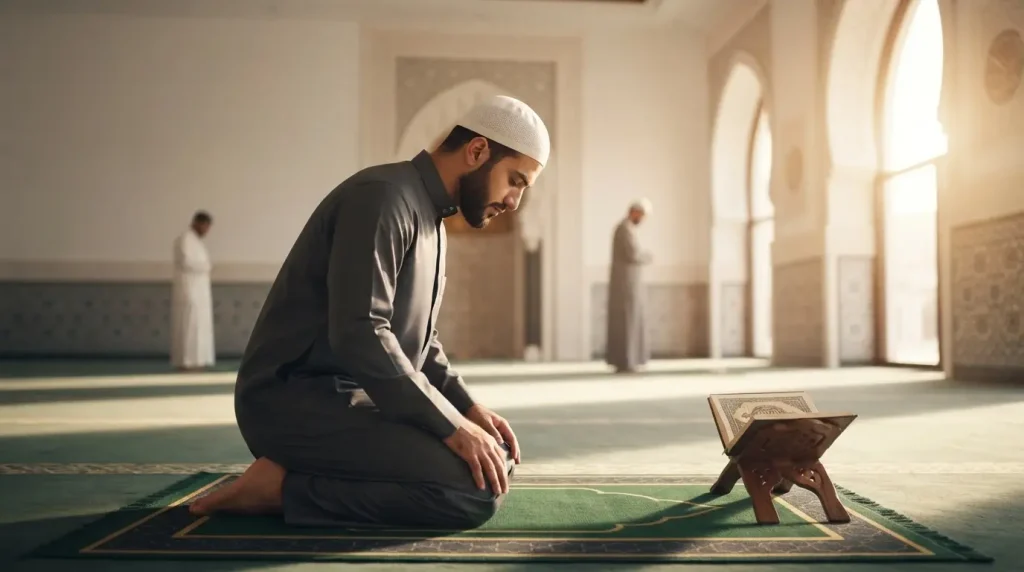
Why Are Salah and Tajweed Important?
The Importance of Salah and Proper Tajweed is something every Muslim should understand to strengthen their worship and relationship with Allah. Salah is the second pillar of Islam and an obligatory act of worship performed five times a day, while proper Tajweed ensures that every word of the Holy Quran is recited correctly as it was revealed to Prophet Muhammad (ﷺ).
Many Muslims regularly perform Salah but are unaware of the correct rules of Quran recitation. Learning Tajweed alongside Salah helps improve pronunciation, preserve the meanings of the Quran, and increase humility (Khushu’) during Muslim prayer. In this guide, you will learn why Salah and Tajweed are inseparable according to the Quran and authentic Sunnah.
The Importance of Salah in Islam
Allah Almighty says in His Glorious Book:
وَأَقِيمُوا الصَّلَاةَ وَآتُوا الزَّكَاةَ وَارْكَعُوا مَعَ الرَّاكِعِينَ
Translation:
“And establish prayer and give zakat and bow with those who bow [in worship and obedience].“
Qur’an 2:43 (Surah Al-Baqarah)
Importance of Salah in the Hadith
The Prophet Muhammad (ﷺ) said:
“Islam is built upon five [pillars]:
- Testifying that there is no god but Allah
- Establishing Salah
- Giving Zakah
- Fasting [Ramadan]
- Performing Hajj” (Sahih Al-Bukhari)
The Islamic Ruling on Abandoning Salah
Regarding the ruling on someone who intentionally abandons Salah, while some classical scholars and certain schools of jurisprudence viewed it as a major act of disbelief (Kufr), the majority of traditional jurists (including the Hanafi, Maliki, and Shafi’i madhhabs) consider such a person to be a major sinner (Fasiq) rather than outside the fold of Islam, provided they still acknowledge its obligation.
Proof: The Prophet (ﷺ) said: “Indeed, between a man and shirk and kufr is the abandonment of prayer.” (Sahih Muslim)
Before learning the practical method of Salah, every Muslim should first understand the conditions that make Salah valid. These conditions are explained in the next section.
Conditions of Salah (Shurut) Every Muslim Must Know
Before performing Salah, every Muslim must fulfil certain conditions (Shurut). These conditions ensure that the prayer is valid according to the Quran and Sunnah. If even one obligatory condition is missing, the Salah may not be accepted.
There are 9 prescribed conditions for Salah:
- Islam
- Sanity (`Aql)
- Puberty (Bulugh)
- Purity (Tahara)
- Removing all forms of impurity from the body
- The entry of the prayer time
- Covering the `Awrah
- Facing the Qiblah
- Intention (Niyyah)
Recommended Etiquettes Before Performing Salah
Preparing properly before Salah helps a Muslim perform prayer with greater concentration, humility (Khushu’), and sincerity. The Prophet Muhammad (ﷺ) taught several beautiful etiquettes that every Muslim should follow before entering the prayer.
- Cleaning the body and clothes thoroughly and using miswak.
- Keeping a pure, sincere intention.
- Waiting for Salah in the masjid.
- Reciting a supplication when leaving the house:
بِسْمِ اللَّهِ تَوَكَّلْتُ عَلَى اللَّهِ، وَلَا حَوْلَ وَلَا قُوَّةَ إِلَّا بِاللَّهِ
(Sunan Abu Dawud)
- Walking calmly and with tranquility toward the prayer.
- Entering the masjid with the right foot and reciting this supplication:
اللَّهُمَّ افْتَحْ لِي أَبْوَابَ رَحْمَتِكَ
(Sahih Muslim)
- When leaving the masjid, step out with the left foot first and recite:
اللَّهُمَّ إِنِّي أَسْأَلُكَ مِنْ فَضْلِكَ
(Sahih Muslim: 713)
- Performing two rak’ahs of Tahiyyat al-Masjid upon entering the masjid.
- Engaging in remembrance while waiting for prayer.
How to Perform Salah Step-by-Step
Once all the conditions of Salah have been fulfilled, a Muslim can begin the prayer. The following step-by-step guide explains the correct method of performing Salah according to the Quran and Sunnah.
- Facing towards the Qiblah with the intention (Niyyah).
- Takbir al-Tahrimah, meaning saying “Allahu Akbar”.
- Raising both hands up to the earlobes (or up to the shoulders) during Takbir.
- Placing the right hand over the left hand on the chest.
- Reciting the opening supplication of prayer:
سُبْحَانَكَ اللَّهُمَّ وَبِحَمْدِكَ وَتَبَارَكَ اسْمُكَ وَتَعَالَى جَدُّكَ وَلا إِلَهَ غَيْرُكَ
- Following this with Ta’awwudh and Tasmiyah:
Ta’awwudh:
أَعُوذُ بِاللَّهِ مِنَ الشَّيْطَانِ الرَّجِيمِ مِنْ هَمْزِهِ وَنَفْخِهِ وَنَفْثِهِ
Tasmiyah:
بِسْمِ اللَّهِ الرَّحْمَٰنِ الرَّحِيمِ
- Reciting Surah Al-Fatihah
Importance of Tartil in Salah
Keeping Tartil in mind while reciting the Quran is essential. Tartil means reading slowly, clearly, and observing the rules of Tajweed. This is what generates true Khushu (humility and focus) in Salah.
بِسْمِ اللّٰهِ الرَّحْمٰنِ الرَّحِیْمِ
اَلْحَمْدُ لِلّٰهِ رَبِّ الْعٰلَمِیْنَۙ (1) الرَّحْمٰنِ الرَّحِیْمِۙ (2) مٰلِكِ یَوْمِ الدِّیْنِﭤ(3) اِیَّاكَ نَعْبُدُ وَ اِیَّاكَ نَسْتَعِیْنُﭤ(4) اِهْدِنَا الصِّرَاطَ الْمُسْتَقِیْمَۙ (5) صِرَاطَ الَّذِیْنَ اَنْعَمْتَ عَلَیْهِمْ ﴰ غَیْرِ الْمَغْضُوْبِ عَلَیْهِمْ وَ لَا الضَّآلِّیْنَ۠ (7)
Surah Al-Fatihah is recited in every rak’ah. The Prophet (ﷺ) stated: “There is no prayer for the one who does not recite the Opening of the Book (Al-Fatihah).” (Sahih Al-Bukhari)
- Saying “Ameen” softly at the end of Surah Al-Fatihah.
- Reciting after Surah Al-Fatihah: After Surah Al-Fatihah and Ameen, read a portion of the Quran—either one long verse or two to three short verses, such as Surah Al-Ikhlas or others.
- How to Perform Ruku (Bowing): Say “Allahu Akbar” while raising the hands, bow down with a straight back, and place both hands firmly on the knees.
- Supplications in Ruku:
- Subhana Rabbiyal-Azeem
- Subhanaka Allahumma Rabbana wa bihamdika
- Rising from Ruku: When standing up from ruku, recite this supplication:
سَمِعَ اللَّهُ لِمَنْ حَمِدَهُ، رَبَّنَا وَلَكَ الْحَمْدُ
- How to Perform Sujood (Prostration): Perform prostration with balance and peace, and recite this supplication:
سُبْحَانَ رَبِّيَ الأَعْلَى
- Sitting between the two Sujood: Rise from prostration saying “Allahu Akbar”, and recite this supplication:
رَبِّ اغْفِرْ لِي، رَبِّ اغْفِرْ لِي
Correct Sitting Position in Tashahhud
When finishing the second rak’ah, sitting for the first tashahhud is called Qa’dah Ula. In this sitting, keep the right foot upright, spread the left foot flat underneath you, and place both hands on the knees.
Ruling on Moving the Finger in Tashahhud
When sitting in Tashahhud, make a fist with your right hand, keep the index finger upright, and move it gently with peace and focus.
While methods for certain physical postures and actions during prayer—such as hand placement, reciting Ameen silently or audibly, and finger movement—may vary slightly across recognized schools of Islamic jurisprudence (Madhhabs), all major traditional methodologies are fully valid and rooted in authentic scholarly interpretations.
The Prophet (ﷺ) said: “Moving the finger is harder on Satan than iron.” (Musnad Ahmad)
Supplications After Tashahhud and Salam
Reciting Durood After Tashahhud
Allahumma salli ‘ala Muhammad wa ‘ala ali Muhammad (Durood-e-Ibrahim is the best of all).
Supplication After Durood
اللَّهُمَّ رَبَّنَا آتِنَا فِي الدُّنْيَا حَسَنَةً وَفِي الآخِرَةِ حَسَنَةً وَقِنَا عَذَابَ النَّارِ
How to End Salah with Salam
After these supplications, turn your face to the right side and say salam until your cheek is visible, then turn your face to the left side and say salam.
The words of Salam are:
السَّلَامُ عَلَيْكُمْ وَرَحْمَةُ اللَّهِ
Recommended Adhkar After Salah
It is Mustahhab (recommended) to recite Istighfar 3 times after Salah, followed by:
اللَّهُمَّ أَنْتَ السَّلَامُ وَمِنْكَ السَّلَامُ، تَبَارَكْتَ يَا ذَا الْجَلَالِ وَالإِكْرَامِ
Why Learning Tajweed Is Important
Learning Tajweed helps every Muslim recite the Holy Quran with correct pronunciation, preserves the meaning of Allah’s words, and increases concentration (Khushu’) in prayer. If you want to improve your Quran recitation, you can join our Online Quran Tajweed Course and learn step by step from qualified teachers. Every Muslim should strive to improve their Quran recitation throughout their life.
Related Article: How to Perform Wudu Step-by-Step According to the Quran and Sunnah
Conclusion
The Importance of Salah and Proper Tajweed cannot be separated. Just as establishing Salah is mandatory, reciting the Quran in Salah with proper Tajweed is also extremely important. If we learn Tajweed, our prayers can become much more humble, beautiful, and peaceful.
May Allah Almighty grant us the ability to maintain our prayers and recite the Quran with proper Tajweed. Ameen.